
Discover how GPS works on smartwatches, explore the surging GPS smartwatch market, and learn why you should add GPS watches to your product lineup.
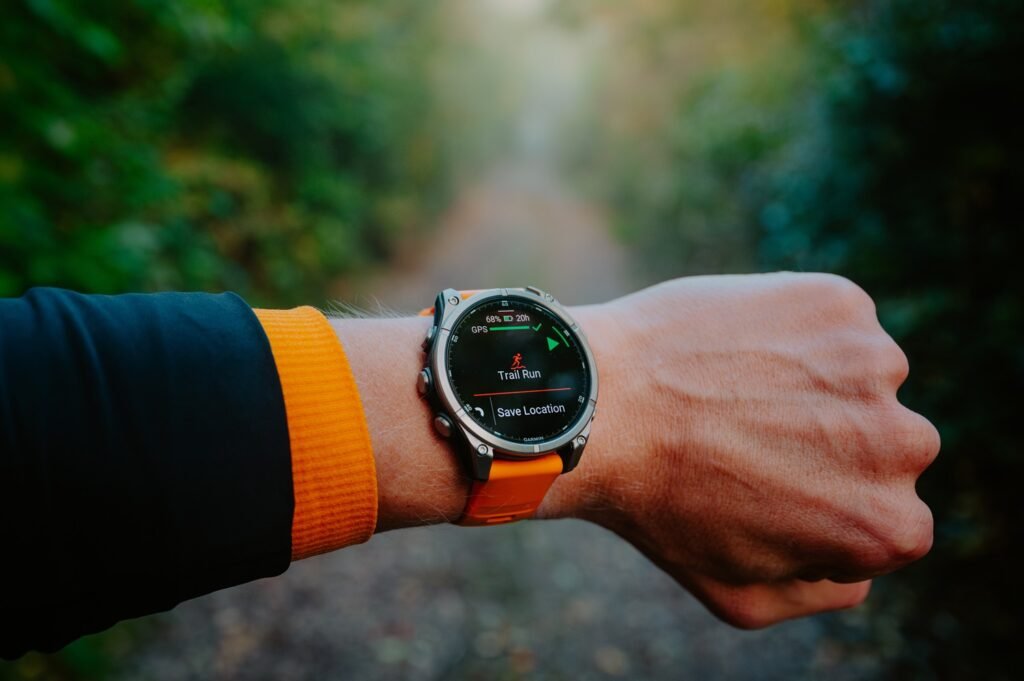
In today’s competitive consumer electronics market, wearable technologies are experiencing remarkable growth. Among them, GPS-enabled smartwatches stand out for their seamless integration of outdoor GPS tracking, fitness monitoring, and wellness insights.
These versatile devices have captivated fitness enthusiasts, outdoor adventurers, and everyday consumers alike. By enabling users to navigate routes, track workout performance, and optimize activities, they have become indispensable companions for personal fitness and adventures.
Whether your customers are weekend hikers or dedicated athletes, GPS smartwatches offer engaging, data-rich experiences that help foster brand loyalty. More importantly, they represent a highly profitable product segment with growing consumer demand. They also provide businesses with the opportunities to explore new revenue streams, increase product lines and expand markets.
In this comprehensive guide, you’ll learn how GPS works on watches, discover why now is the ideal time to sell them, and gain insight into why they’re worth adding to your product line.
What Is GPS?
GPS, or Global Positioning System, is a satellite-based navigation system developed and maintained by the United States government. It’s widely used in smartphones, cars, and many apps to track movement and provide directions. Whether you’re driving a car, flying a plane, or taking a leisurely bike ride, GPS helps pinpoint your position anywhere on the globe—often with remarkable accuracy.
GPS uses satellites to pinpoint a device’s location without needing an internet or phone signal. You don’t have to send any data for it to work—it simply connects to satellites in orbit. As of September 26, 2024, there are 31 GPS satellites in orbit around Earth, and anyone with a GPS device can use it for free.
GPS is part of a broader framework known as GNSS (Global Navigation Satellite System), which also includes other navigation systems like GLONASS, Galileo, and BDS, each with its strengths. Let’s take a closer look at what sets these systems apart.
| Key Differences between GPS, GLONASS, Galileo and BDS | ||||
| GPS | GLONASS | Galileo | BDS | |
| Operator | United States | Russia | European Union | China |
| Coverage | Global | Global | Global | Initially regional, now Global since 2020 |
| Accuracy | With an accuracy of about 5-10 meters for civilian use under ideal conditions. | With an accuracy of around 5-10 meters for civilian use. | With higher accuracy than GPS and GLONASS for civilian users, often within 1 meter. | With civilian accuracy within 5-10 meters globally, with 1-meter accuracy regionally in Asia-Pacific. |
| Strengths | Highly reliable and globally used.Well-integrated into various consumer devices (smartphones, vehicles, wearables).Has a long-established network, with around 31 operational satellites. | Often used in combination with GPS for enhanced accuracy in environments where GPS may not have a strong signal, such as urban canyons or northern areas.Better performance in northern latitudes (high latitudes closer to the poles, such as Russia and northern regions). | Higher accuracy for civilian users and commercial applications.Better precision for urban and densely populated areas.Provides emergency response features, allowing users to be located quickly in distress situations. | Offers regional services with higher accuracy in Asia-Pacific.Includes two-way communication, allowing for positioning and communication in remote areas, which is unique among these systems. |
Each of these systems operates independently, but modern devices, such as smartphones and smartwatches, often support multiple systems simultaneously to enhance accuracy and reliability. For example, a smartwatch or phone may use GPS, GLONASS, Galileo, and BDS together to calculate your location more precisely, especially in challenging environments like cities with tall buildings or dense forests.
How GPS Works on Smartwatches
Over the past two decades, the size and cost of GPS technology has steadily decreased, allowing it to be seamlessly integrated into mobile devices and wearables. This miniaturization paved the way for GPS-enabled smartwatches, making advanced navigation and tracking features accessible right from your wrist.
GPS relies on a constellation of at least 24 satellites orbiting Earth. A GPS smartwatch is like a compact receiver designed to communicate with these satellites orbiting Earth. Each satellite is constantly moving, sending signals that include their position and the precise time the signal was sent.
By receiving signals from at least 3 satellites, your GPS smartwatch can calculate how long it took for each signal to arrive and use this data to determine its location. As you move, the watch continually receives signals from different satellites, constantly updating your location in real time.
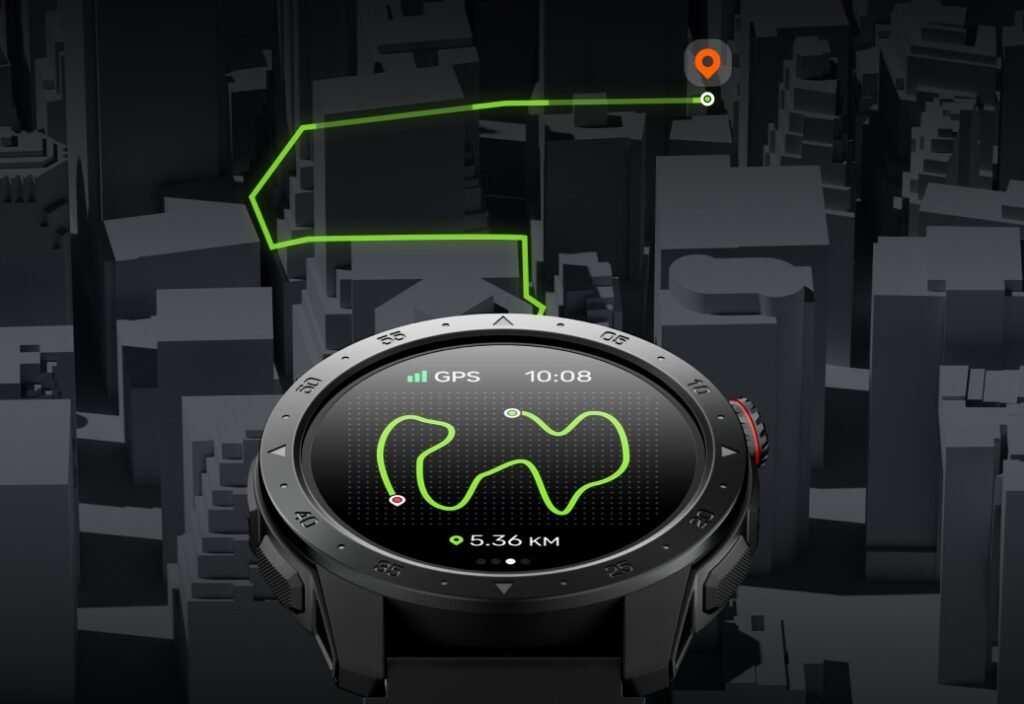
To enhance positioning capabilities, many GPS smartwatches also utilize other technologies, such as GLONASS or Galileo mentioned above. Additionally, most GPS watches often integrate accelerometers, barometers, compasses, and other sensors to further refine position readings. The latest GTX2 GPS Outdoor Smart Watch from Langmoya Technology goes a step further, offering not only GPS route tracking and navigation but also an altitude barometer. This feature provides real-time altitude and pressure readings, helping users stay oriented and adapt seamlessly to their environment.
Top GPS Features in Smartwatches
GNSS systems on smartwatches, including GPS, are commonly used for features such as outdoor exercise, route tracking, hiking and cycling, allowing users to view maps of their activities and obtain precise data on performance metrics such as distance, speed and elevation change.
- Location Tracking: Most smartwatches with GPS allows you to see your exact location, whether you’re in a city or out in nature. This feature is often used in navigation apps and to track routes.
- Fitness and Movements Tracking: GPS is important for tracking activities like running, cycling, hiking, and walking. It works by measuring how your location changes over time, helping it calculate distance, speed, elevation, and more. By recording your route and more data, you can get more accurate data to improve your workouts.
- Outdoor Adventure and Mapping: Many GPS-enabled smartwatches or fitness tracker show maps or breadcrumb trails, allowing you to see where you’ve been and helping you navigate back to your starting point. Some watches even allow you to upload routes in advance.
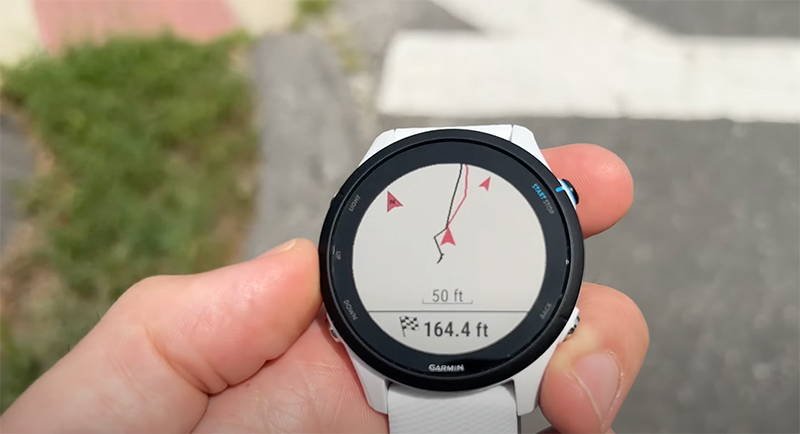
- Real-Time Pace and Distance: For runners and cyclists, GPS enables real-time feedback on pace and distance, which can be useful for tracking progress and achieving training goals.
- Emergency SOS and Location Sharing: Some smartwatches allow you to share your GPS location in emergencies or with friends/family for safety. This feature is especially helpful when hiking or traveling in remote areas.
- Weather and Altitude Tracking: Certain smartwatches combine GPS with barometric sensors to track altitude changes, useful for hikers and climbers. GPS data can also assist with weather forecasting in some devices.
- Geofencing and Alerts: Some smartwatches with GPS allow you to set specific zones (geofencing), and the watch can alert you when you enter or leave these areas. This is useful for parents or caregivers tracking the location of children or elderly family members.
- Adventure-Ready Modes: Some GPS watches offer specialized modes—like ski run counters or open-water swim trackers—tailored to niche activities and extreme environments.
Each of these GPS-related features enhances the functionality of a smartwatch, especially for fitness enthusiasts, adventurers, and safety-conscious users.
GPS Watch Market Trends
As designs and capabilities evolve, GPS smartwatches have become indispensable companions for both comprehensive wellness tracking and outdoor adventure planning. This integration enhances the outdoor experience, appealing to fitness enthusiasts and adventurers alike, driving significant growth in the GPS watch market.
High Demand
The surge in fitness and adventure activities has led to a sharp rise in demand for GPS watches. These devices provide precise tracking, helping users monitor progress, stay motivated, and achieve personal goals.
Key Users: Outdoor enthusiasts such as hikers, campers, and explorers use GPS watches for tracking adventures, navigating remote areas, and route planning, especially where smartphones are unreliable.
Advanced Features
GPS watches now offer more than navigation, with features like heart rate monitoring, sleep tracking, and smart notifications, enabling users to manage health and stay connected.
Key Users: Health-conscious individuals who focus on maintaining an active lifestyle by monitoring metrics such as heart rate, sleep patterns, and calorie counts.
Health & Safety
Location tracking and emergency assistance features have made GPS watches a must-have for those prioritizing safety.
Key Users: Safety-conscious individuals such as Parents, caregivers, and professionals value GPS watches for their real-time tracking and emergency features, ensuring peace of mind.
Why Selling GPS Watches Is A Good Business?
As of 2024, GPS watches hold a significant share of the smart wearable market by 2024, with leading brands such as Garmin and Fitbit dominating the market.
- Garmin, known for its powerful GPS features, is loved by athletes and outdoor enthusiasts. Popular models like the Garmin Fenix series and Garmin Venu Sq are highly regarded for their accuracy and durability.
- Fitbit has established a strong presence with GPS-enabled devices such as the Fitbit Versa series, appealing to health-conscious individuals and tech-savvy users.
1. Capitalizing on High Demand
The convergence of fitness trends, adventure tourism, and technological advancements has created a thriving market for GPS watches. The demand is driven by their versatility, appealing to diverse demographics, and offering significant growth potential for businesses.
2. Profit Potential
- High Pricing: Advanced features like GPS tracking, health monitoring, and connectivity justify higher pricing, leading to strong profit margins.
- Recurring Revenue Streams: Integration with apps that offer subscription services provides ongoing revenue opportunities.
3. Loyal Customer Base
Passionate communities of fitness enthusiasts and adventurers appreciate high-quality devices, fostering brand loyalty and encouraging repeat purchases.
4. Versatile Applications
GPS watches can serve multiple needs—from fitness and health monitoring to GPS tracking and navigation—broadening their appeal across markets.
5. Differentiation and Growth Opportunities
- Competitive Advantage: Offering GPS-enabled smartwatches with unique features sets your business apart.
- Cross-Selling Potential: GPS watches pair well with accessories, apparel, and subscription-based platforms, enabling diverse revenue streams.
6. Sustainable Growth
With growing interest in health tracking and outdoor exploration, GPS watches cater to long-term trends, ensuring a reliable and expanding market.
By combining fitness tracking, health monitoring, and outdoor navigation, GPS smartwatches cater to a wide range of needs, making them indispensable gadgets for modern lifestyles. This convergence of functionality drives the growing demand and creates substantial opportunities for businesses to thrive in the GPS smartwatch market. How do you think this aligns with your business goals?
Looking for OEM GPS Watches?
Want to create your own GPS watch line?
Tired of selling generic, one-size-fits-all GPS watches?
Want to add your logo or exclusive features that set your brand apart?
At Langmoya Technology, we provide a comprehensive range of OEM and ODM customization options to bring your vision to life. Whether you want a fully customized GPS smartwatch line, need to add a unique touch to an existing design, or custom branding and packaging, our OEM/ODM/OBM (Original Branding Manufacturing) solutions are here to help.
Here’s what we offer:
- Custom Branding: Add your logo, brand colors, and personalized packaging for a professional and cohesive look.
- Tailored Designs: Choose from strap colors, custom watch faces, and app customization—perfect for gifting, online, or retail markets.
- Advanced Features: Access cutting-edge services like Bluetooth connectivity, SDK development, and app UI customization to cater to diverse industries.
- Exclusive Features: Integrate unique functionalities like multi-system GNSS, altimeter-barometer, fitness tracking, and more to meet your audience’s needs.
- Stand Out: Design a product that reflects your brand’s identity, setting you apart from generic, one-size-fits-all models.
- Full Support: From design to production, we guide you every step of the way to ensure your GPS watch exceeds expectations.
- Scalable Production: Flexible manufacturing to handle orders of any size, whether you’re a startup or an established brand.
- Timely Shipment: Enjoy fast, reliable delivery, even during peak holiday sales, to keep your customers satisfied.
Why Choose Langmoya Technology?

Established in 2015, Langmoya is a trusted leader in the smartwatch industry with over 9 years of experience in R&D, design, and manufacturing. Based in Shenzhen, China, our 450-strong team includes hardware engineers, software programmers, application developers, and UI designers. We are ISO9001 certified and have passed the BSCI social responsibility audit, ensuring the highest standards in both quality and ethical practices.
Our Highlights:
- Over 10 years of smartwatch manufacturing expertise
- One-stop customization services tailored to your brand
- Products sold in over 50 countries worldwide
- Partnerships with top international retailers and buyers
- Fast, reliable delivery with efficient logistics
- ISO9001-certified and BSCI-compliant
Factors Affect Your GPS Watch’s Accuracy
Reliable location data is essential for smartwatches and applications ranging from fitness tracking to outdoor navigation. However, several variables can influence GPS performance:
Number of Satellites: More satellites in view generally improve accuracy. At least 4 satellites are needed for 3D positioning, but having more satellites available allows for better error correction and more precise location data.
Satellite Geometry: The relative positions of satellites in the sky can impact accuracy. If satellites are closely grouped or poorly arranged, your watch may have difficulty calculating a precise location. The ideal satellite distribution forms a wider angle.
Environmental Conditions: Dense forests, tall buildings, tunnels, deep canyons, or other obstacles can block or weaken GPS signals, reducing accuracy. Weather conditions like heavy cloud cover may also degrade signal quality. This is especially common in urban areas or forests.
Multi–path Effect: GPS signals can bounce off buildings, mountains, or other large objects before reaching your watch. This can cause the signal to take a longer path, leading to inaccurate position calculations.
Signal Noise and Interference: Other electronic devices, radio frequencies, or environmental factors can introduce noise or interference to the GPS signals, reducing the accuracy of the location calculation.
Intentional Interference or Jamming: Sometimes GPS signals can be intentionally blocked or disrupted, especially in military zones, affecting the reliability and accuracy of civilian GPS.
User Practices: Ensuring a clear line of sight to the sky, avoiding signal-blocking accessories, and periodically recalibrating sensors help maintain the device’s accuracy.
Conclusion
From basic navigation tools to comprehensive health and fitness platforms, GPS-enabled smartwatches are revolutionizing the wearables industry. These innovative devices not only cater to consumer demands but also create significant opportunities for business growth.
As the market expands, businesses can seize this golden opportunity to thrive, while consumers benefit from innovative solutions that promote healthier and more adventurous lifestyles. By gaining a deeper understanding of GPS technology, its diverse applications, and the key drivers of its growth, you can harness the potential of GPS in smartwatches to stay ahead in the competitive wearables market.